Oil Seals Manufacturer
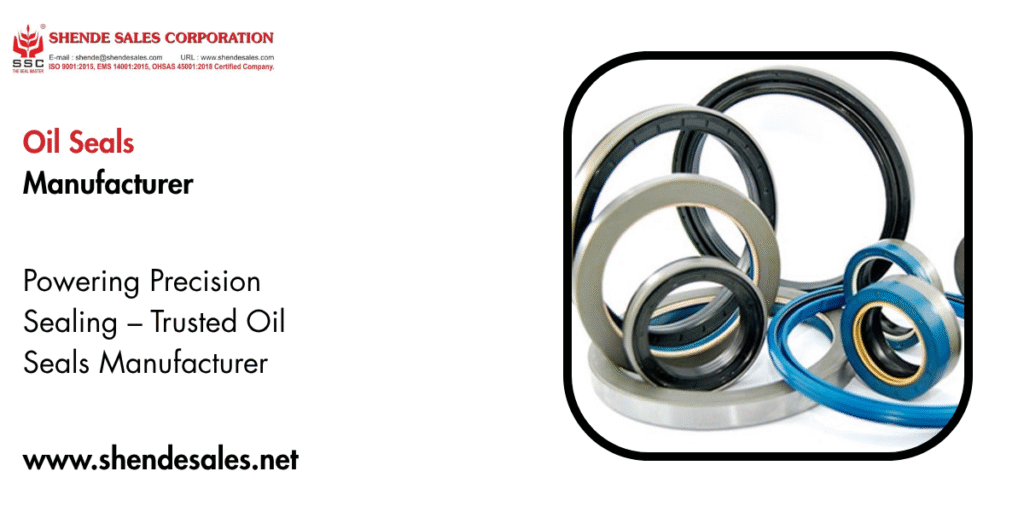
Table of Contents
Introduction
Shende Sales Corporation was established in the year of 1988. We are a Leading Industrial Rubber O Ring Manufacturer, Wholesaler, and Supplier of O Ring and Oil Seals that include Rubber Seals, Rubber Rings, Rubber Extruded / Moulded Products, Rubber Bellow, Rexene Bellow, Diaphragm, Rubber Gasket. These are available in various specifications that meet national and international quality standards.
Sealing components are essential to the effectiveness, longevity, and safety of machinery in contemporary industrial processes. Among these, oil seals are crucial parts that stop lubricant leaks and shield machinery from impurities like moisture, dust, and grime. For companies that rely on high-performance machinery, selecting a reliable Seals Manufacturer is essential. In the world of industrial sealing solutions, Shende Sales Corporation is a reputable brand that provides premium seals made to satisfy the needs of several applications in the manufacturing, heavy engineering, and automotive industries.
Shende Sales Corporation stands as a dependable name in the manufacturing and supply of high-quality seals designed for diverse industrial applications. With a focus on durability, precision engineering, and consistent performance, the company delivers sealing solutions that meet the evolving needs of industries across sectors. We are the best Oil Seals Supplier.
What Are Oil Seals
- Oil seals, also known as rotary shaft seals, are mechanical components used to seal the gap between stationary and rotating parts of a machine. Their primary function is to retain lubricants like or grease inside the system while preventing external contaminants from entering. We are the best Oil Seals Provider.
- A flexible rubber lip
- A metal casing for structural support
- A spring to maintain constant pressure on the shaft
- Oil seals are widely used in engines, gearboxes, pumps, compressors, and other rotating machinery.
Why Choose Shende Sales Corporation
1. High-Quality Material Standards
- A reputed seals manufacturer uses premium-grade materials such as nitrile rubber (NBR), fluoroelastomers (FKM), silicone, and polyacrylate. These materials are selected based on temperature resistance, chemical compatibility, and durability. High-quality materials ensure that the seals can withstand harsh operating conditions without deformation or wear.
2. Precision Engineering and Design
- Oil seals must be manufactured with precise dimensions and tolerances to ensure a perfect fit. Leading manufacturers use advanced engineering techniques and modern machinery to produce seals that offer optimal sealing performance. Proper design minimizes friction, reduces wear on shafts, and enhances the lifespan of both the seal and the equipment.
3. Leak Prevention and Protection
- The primary function of seals is to prevent leakage of lubricants while keeping external contaminants out. A trusted manufacturer ensures that each seal is designed to provide a tight and reliable barrier. This helps maintain lubrication, reduce friction, and protect internal components from damage, ultimately improving machine efficiency.
4. Wide Range of Applications
- A professional oil seals manufacturer offers products suitable for diverse industries such as automotive, construction, agriculture, mining, and manufacturing. They provide different types of seals, including radial shaft seals, rotary seals, hydraulic seals, and custom-designed solutions tailored to specific applications.
5. Customisation Capabilities
- Different machines have different requirements. Reliable manufacturers offer customization options in terms of size, material, design, and performance characteristics. This ensures that clients receive seals that perfectly match their operational needs, even for specialized or high-performance applications.
6. Consistency and Quality Control
- Top manufacturers follow strict quality control processes and international standards to maintain consistency in their products. Each oil seal undergoes rigorous testing for durability, pressure resistance, temperature tolerance, and leakage prevention. This ensures dependable performance across all batches.
7. Cost-Effective Solutions
- While high-quality oil seals may seem slightly more expensive initially, they reduce long-term maintenance and replacement costs. A dependable manufacturer provides products that last longer, minimising downtime and improving overall productivity. This makes them a cost-effective choice in the long run.
8. Technical Support and Expertise
- Experienced manufacturers offer technical guidance to help customers choose the right type of seal for their application. Their expertise ensures proper installation, selection of materials, and troubleshooting, which helps in avoiding premature failures.
9. Improved Machine Efficiency
- Using high-quality oil seals enhances the overall efficiency of machinery by maintaining proper lubrication and reducing friction. This leads to smoother operation, lower energy consumption, and extended equipment life.
10. Reliability and Trust
- Established seals manufacturers build their reputation through consistent performance, product reliability, and customer satisfaction. Partnering with a trusted manufacturer ensures peace of mind, knowing that the components used are dependable and industry-approved.
Applications of Oil Seals
1. Automotive Industry
- One of the largest applications of oil seals is in automobiles. They are used in engines, gearboxes, crankshafts, camshafts, wheel hubs, and axles. Oil seals help maintain proper lubrication, reduce friction, and prevent leakage, ensuring smooth vehicle performance and longer engine life.
2. Industrial Machinery
- Oil seals are widely used in industrial machines such as pumps, compressors, hydraulic systems, gearboxes, and conveyors. In these applications, oil seals ensure that moving parts remain properly lubricated while preventing contamination from external particles, thereby improving machine efficiency and durability.
3. Agricultural Equipment
- Machines like tractors, harvesters, and irrigation pumps rely heavily on seals. These machines often operate in dusty, muddy, and harsh environments, making seals essential for protecting internal components from dirt and maintaining lubrication integrity.
4. Construction Equipment
- Heavy-duty equipment such as excavators, bulldozers, loaders, and cranes uses seals in hydraulic cylinders, axles, and rotating joints. These seals help withstand high pressure and heavy loads while ensuring smooth operation in tough working conditions.
5. Marine Applications
- In marine engines and propulsion systems, seals are used to prevent water ingress and oil leakage. They must resist corrosion from saltwater and perform reliably under continuous operation in humid and challenging environments.
6. Power Generation Plants
- Oil seals are used in turbines, generators, and compressors in power plants. They help maintain lubrication in high-speed rotating equipment and prevent contamination that could lead to equipment failure or downtime.
7. Aerospace Industry
- In aircraft engines and landing gear systems, seals play a crucial role in maintaining lubrication and ensuring safety. These seals must meet strict performance standards due to extreme operating conditions such as high altitude, temperature variations, and pressure changes.
8. Manufacturing & Processing Plants
- In industries such as food processing, chemical plants, and pharmaceuticals, seals are used in mixers, agitators, and rotating machinery. Depending on the application, seals are often designed to meet hygiene and chemical resistance requirements.
9. Oil & Gas Industry
- In drilling equipment, pipelines, and processing machinery, oil seals help manage high-pressure fluids and prevent leaks of and gas. They are designed to withstand extreme temperatures, pressure, and chemical exposure.
10. Textile and Food Processing Machinery
- In textile machines and food processing equipment, seals ensure contamination-free operation. They help maintain hygiene standards in food-grade machinery while ensuring the smooth functioning of moving parts.
Table of Specification Oil Seals
| Parameter | Specification Details |
|---|---|
| Material | Oil Seals |
| Temperature Range | -40°C to +250°C (depending on material) |
| Pressure Handling | Up to moderate pressure levels |
| Shaft Speed | Suitable for high-speed rotating shafts |
| Design Types | Single lip, double lip, metal case |
| Lubrication | Oil, grease, and synthetic lubricants |
| Sizes Available | Custom and standard metric/imperial sizes |
| Application | Automotive, industrial, agricultural |
| Resistance | Heat, oil, abrasion, chemicals |
| Lifespan | Long-lasting with proper installation |
Benefits of Oil Seals
1. Superior Leakage Prevention
- A professional manufacturer designs seals with precision to ensure tight sealing between moving and stationary parts. This minimises oil or lubricant leakage, helping machines operate smoothly and efficiently without interruptions.
2. Enhanced Equipment Life
- By preventing contamination and maintaining proper lubrication, seals reduce friction and wear and tear on machine components. This significantly extends the lifespan of bearings, shafts, and other critical parts.
3. High-Quality Materials
- Reputed manufacturers use premium-grade materials such as nitrile rubber (NBR), silicone, fluorocarbon (FKM), and polytetrafluoroethylene (PTFE). These materials provide excellent resistance to heat, chemicals, pressure, and harsh environmental conditions.
4. Customisation Options
- An experienced oil seals manufacturer can provide customised solutions tailored to specific industrial requirements. This includes variations in size, design, material, and performance specifications to suit different applications and machinery.
5. Improved Machine Efficiency
- Proper sealing reduces friction and energy loss within the system. This leads to smoother operation, better energy efficiency, and reduced operational costs over time.
6. Resistance to Extreme Conditions
- High-quality oil seals are designed to withstand extreme temperatures, high pressures, and exposure to aggressive fluids. This makes them suitable for demanding industrial environments and continuous operations.
7. Reduced Maintenance Costs
- By preventing leakage and contamination, seals reduce the frequency of breakdowns and maintenance requirements. This helps industries save time, labour, and repair expenses.
8. Consistency and Reliability
- Trusted manufacturers follow strict quality control processes and testing standards. This ensures consistent performance and reliability across all produced seals, reducing the risk of failure in critical applications.
9. Wide Range of Applications
- Oil seals manufactured with precision can be used in automotive engines, gearboxes, pumps, compressors, hydraulic systems, and various rotating equipment, making them highly versatile components.
10. Compliance with Industry Standards
- Professional manufacturers adhere to international quality and safety standards, ensuring that their products meet the required performance benchmarks for different industrial sectors.
Types of Oil Seals
1. Single Lip Oil Seals
- Single lip seals are the most basic and widely used type. They consist of one sealing lip that comes in contact with the shaft.
Features:
- Suitable for low to moderate pressure
- Effective in preventing oil leakage
- Used in general machinery and automotive applications
2. Double Lip Oil Seals
- Double lip oil seals have an additional sealing lip that provides extra protection against contaminants.
Features:
- Improved sealing performance
- Secondary lip acts as a dust guard
- Better protection in harsh environments
3. Rubber Oil Seals
- These seals are made from high-quality elastomer materials such as Nitrile Rubber (NBR), Silicone, or Viton.
Features:
- Excellent flexibility
- Resistant to oil, heat, and chemicals
- Long-lasting performance
4. Metal-Cased Oil Seals
- Metal-cased oil seals feature a metal outer shell combined with a rubber sealing element.
Features:
- Strong structural integrity
- Easy installation
- High durability under stress
5. Spring-Loaded Oil Seals
- These seals include a spring that maintains constant pressure on the sealing lip, ensuring a tight seal.
Features:
- Maintains consistent sealing force
- Compensates for wear and tear
- Ideal for high-speed operations
Conclusion
Oil seals are indispensable components in ensuring the smooth and efficient operation of mechanical systems across industries. Choosing a reliable oil seal manufacturer is crucial for maintaining performance, reducing downtime, and minimising operational costs. We are the best Oil Seals Supplier in Pune.
Shende Sales Corporation continues to deliver high-quality sealing solutions with a strong focus on durability, precision, and customer satisfaction. With a wide range of products, expert guidance, and commitment to excellence, the company stands as a trusted partner for industries seeking dependable sealing solutions.